TV Shows That Got Worse: The Biggest Quality Drops, Ranked
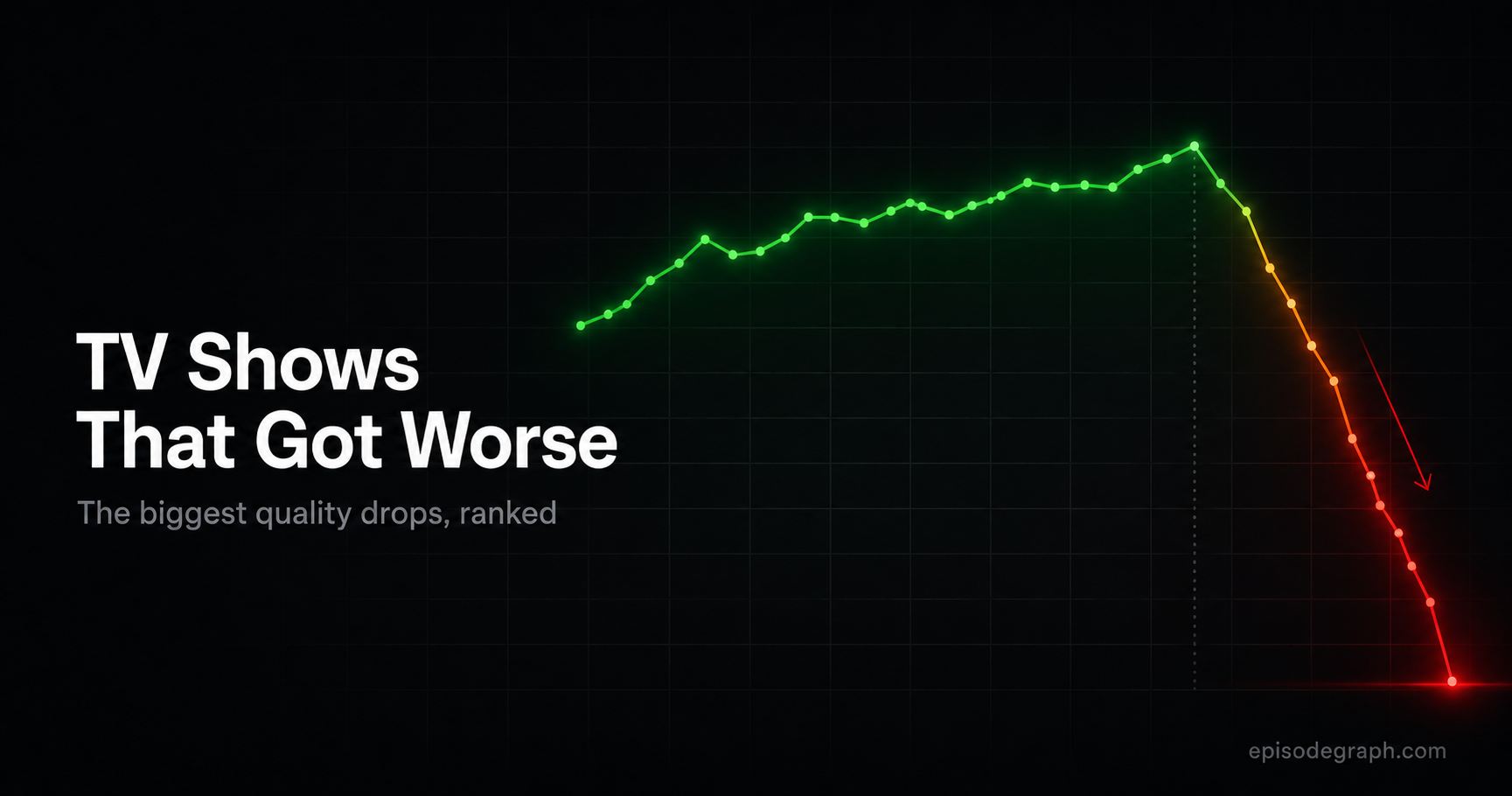
Every great show lives in fear of the same ending: the slow realization, somewhere in the back half, that it isn't what it used to be. We talk about TV shows that got worse over time as if it's one phenomenon, but the data shows two very different shapes. Some series fall off a cliff — seven steady seasons and then a single catastrophic one. Others bleed out slowly, losing a little ground every year until the magic is gone. Both shapes are invisible in an overall score and obvious the moment you rate every episode. Here are the biggest quality drops in modern TV, ranked by where the floor actually fell out, read straight off the heatmaps that power every page on EpisodeGraph.
How we measure a show falling off
A show's overall rating is an average, and an average forgives almost everything. A series can post one of the worst final seasons ever made and still look "good" on paper, because seven strong years drag the number up. The heatmap refuses to do that: each cell is one episode, green for the highs and red for the lows, so a collapse shows up as a wall of color simply changing. We look at two things — the gap between a show's peak season and its weakest, and whether the decline was a sudden cliff or a steady erosion. One caution we build into every read: a brutally low score isn't always the audience speaking. Final seasons and divisive episodes are frequent targets of organized review-bombing, which can drag a single episode well below where most viewers actually landed. That's why vote counts sit next to every score on the grid, and why these ratings, being live, keep shifting as more people weigh in.
Game of Thrones — the cliff that defined the genre
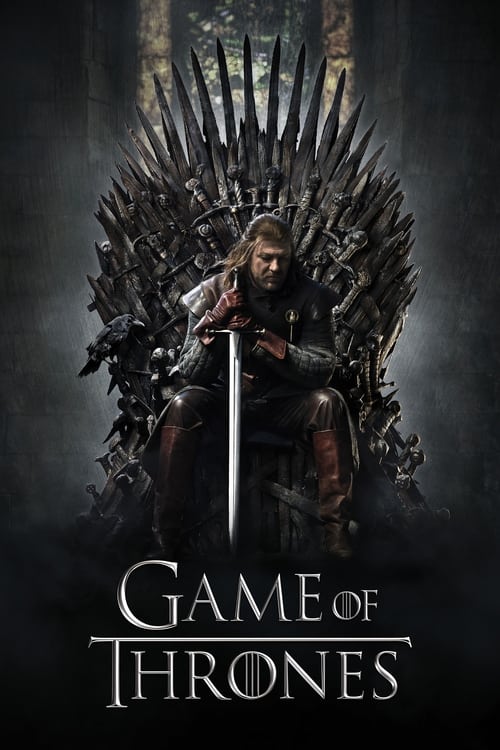
Game of Thrones is the textbook collapse, and its heatmap is almost violent to look at. For seven seasons the grid is a near-unbroken field of green: season averages hovered between roughly 9.0 and a Season 4 peak around 9.45, with barely a weak episode in sight. Then Season 8 dropped the floor out, falling to an average near 7.85 — and the finale, "The Iron Throne," cratered into the low 4s, one of the steepest single-episode falls ever recorded on the platform. Part of that low is genuine disappointment and part is review-bombing piling on, but the shape is undeniable: this is what falling off a cliff looks like as a picture. If you're searching "Game of Thrones season 8 ratings," the grid tells the whole story in two colors.
Dexter — a slow bleed and the most infamous finale
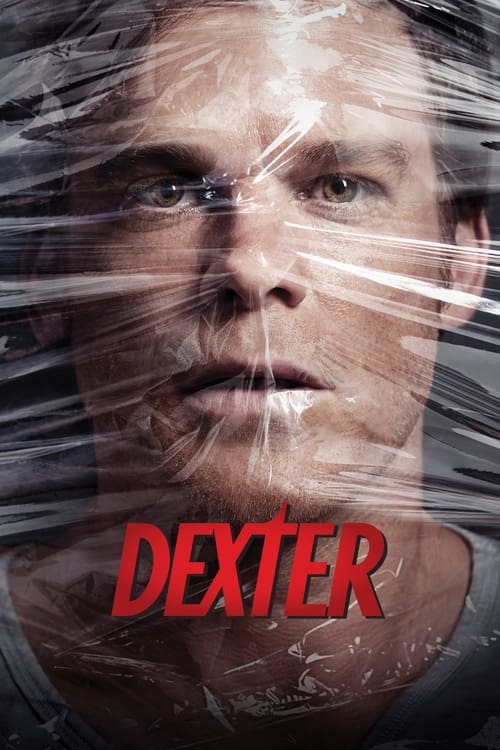
Dexter is the opposite shape: erosion, not collapse. The show peaked hard in its fourth season, carried by an all-time great villain, and the grid is gorgeous through that stretch. From Season 5 onward the green starts thinning out, a brief Season 7 rebound aside, until Season 8 and its widely panned finale — regularly grouped with the worst series endings ever alongside Game of Thrones. The show later returned for a soft-sequel that tried to fix the ending and stumbled at the line a second time. On the heatmap you can see exactly where the bleed begins, which is the kind of thing a single "good show" rating quietly hides.
The Walking Dead — death by a thousand cuts
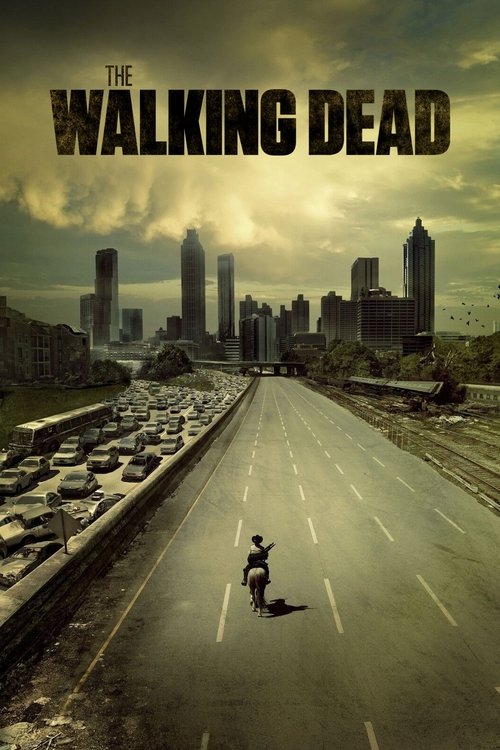
No show on this list eroded for longer than The Walking Dead. Its early seasons posted strong, consistent grids, but the series took a shocking dip into its eighth season and spent years on a downswing, with stretches of the back catalogue sitting among its lowest-rated episodes. It clawed back some goodwill late, but its heatmap is the longest red stretch here — proof that a show can lose its audience an inch at a time rather than all at once, and that the overall score is the last place you'd ever notice.
Westworld — the cleanest "worse every season"
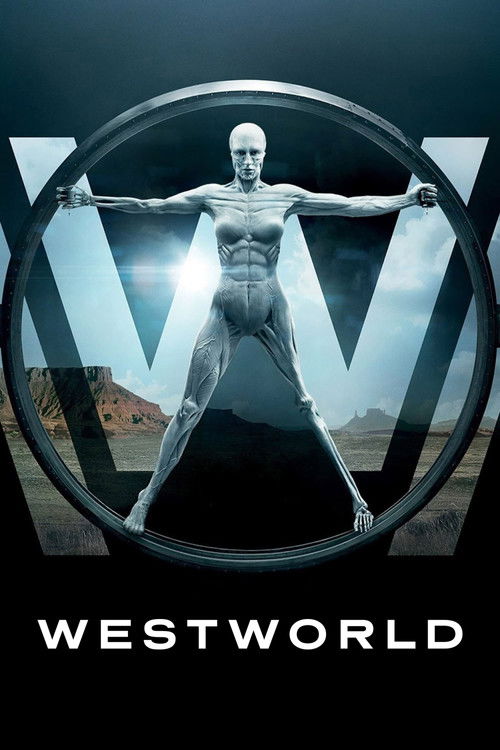
If any show genuinely got worse year over year, it's Westworld. Its first season was a critical sensation with a tightly green grid; each subsequent season cooled the colors a little more as the timelines tangled and the audience thinned, until the show was cancelled before it could finish its story. It's the rare series whose heatmap really does step down season by season — the closest thing to a true monotonic decline on this list.
House of Cards — the steepest drop on record
By raw numbers, House of Cards may hold the single worst season-over-season fall of any long-running series. Its final season, produced after the show lost its lead actor, collapsed relative to everything before it. It comes with the biggest asterisk on this page: that season was heavily brigaded, so part of the drop reflects an organized campaign rather than ordinary viewing. It's the perfect illustration of why the heatmap shows vote counts — the shape of a fall and the reason behind it aren't always the same thing.
Heroes — the fastest fall from a phenomenon
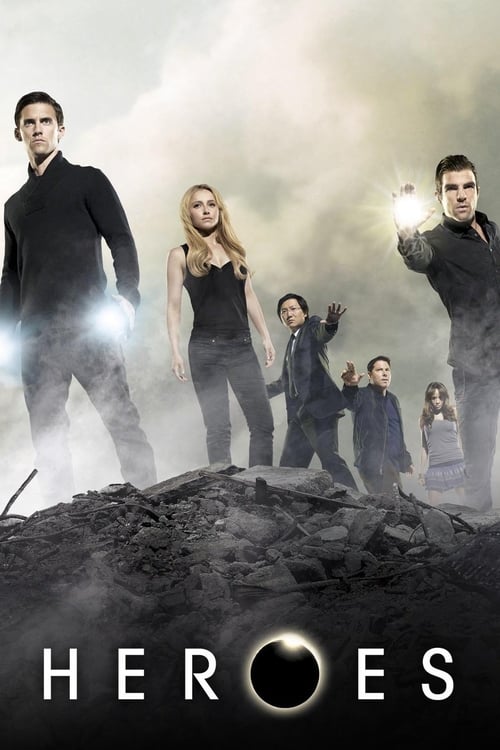
Few shows rose and fell as fast as Heroes. Its first season was a genuine cultural event with a strong, consistent grid; then a writers' strike, ballooning plots and diminishing stakes sent the quality into free-fall almost immediately, and it was gone after four seasons. Its heatmap is the cautionary tale every new hit should study: a spectacular debut is no guarantee the second season won't start the slide.
The counterexample: how the greats avoid it
It's worth ending on the shows that prove the fall isn't inevitable. Breaking Bad is the anti-Game-of-Thrones: its grid gets greener almost every season, climbing to a finale that ranks among the highest-rated episodes ever made. That's the real value of reading a show by its heatmap rather than its headline number — the same tool that exposes a collapse also reveals the rare series that kept getting better right up to the end. When you're deciding what to commit to, that shape is the single most useful thing to know.
Frequently asked questions
What TV show had the biggest drop in quality?
Game of Thrones is the most famous, with its final season falling roughly a season-and-a-half in average rating and a finale collapsing into the low 4s. By raw season-over-season numbers, the final season of House of Cards may be even steeper — though it was heavily review-bombed, so the figure comes with a caveat.
Which show actually got worse every single season?
Westworld is the closest to a true season-by-season decline, cooling a little more with each year until its cancellation. Most other "fall off" shows, including Game of Thrones, were steady for years and then collapsed in a single season rather than declining gradually.
Is the Game of Thrones finale really the worst-rated episode?
It's among the lowest-rated finales of any major series on IMDb, sitting in the low 4s. Some of that is genuine fan disappointment and some is organized review-bombing, which is why looking at the whole season's grid gives a fairer picture than one number.
Why do final seasons so often get worse?
Common culprits include rushed pacing, running out of or ahead of source material, cast departures, and the impossible weight of expectation on an ending. The heatmap can't explain why a show fell off, but it shows exactly when it did.
Do these ratings change over time?
Yes. IMDb and community scores are live and shift as more people vote, and review-bombing campaigns can move a number sharply in either direction. The heatmaps always reflect the current figures whenever you open them.
The takeaway
A show getting worse is never really one story — it's a cliff or a slow bleed, genuine disappointment or an organized pile-on, and an overall rating flattens all of it into a single forgiving number. The heatmap won't let it hide: open any grid above and the exact season the floor gave way is right there in the color. Whether you're deciding where to stop a rewatch or whether a legendary show is worth starting at all, that shape tells you more than any score ever could.